
90% faster version comparisons 50% reduction in troubleshooting time 80% fewer deployment error
Fugro’s engineers found that the vendor-native versioning tools for its programmable logic controllers (PLCs) did not provide sufficient visibility into all changes. To address this, Fugro adopted Software Defined Automation (SDA) for its PLC development workflows, applying Industrial DevOps principles for comprehensive version comparison, traceability, and validation. This approach gives engineers greater confidence that changes are fully understood, reduces the risk of deploying incorrect versions, and enables faster, more reliable troubleshooting.
About Fugro
Fugro is the world’s leading Geo-data specialist. Using unique map, model and monitor solutions, they provide project critical insights into the built and natural environment. Fugro supports clients by delivering solutions in support of the energy transition, large-scale infrastructure development and climate resilience. With expertise in site characterisation and asset integrity, clients are supported in the safe, sustainable and efficient design, construction and operation of their assets throughout the life cycle. Employing approximately 10,000 people in 52 countries, Fugro serves clients around the globe.
Challenge: Traditional PLC tools fall short
A key differentiator for Fugro lies in the systems it develops to collect and process geo-data for critical industries such as offshore energy, infrastructure, and water management.
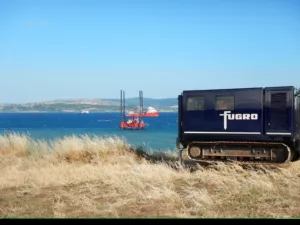
Fugro’s equipment, such as its next-generation autonomous subsea drills, use custom-built field controllers with proprietary software. Those machines are supported by systems running off Siemens programmable logic controllers (PLCs). For its proprietary software, Fugro automation engineers utilize modern Git methodologies to manage field-ready and development versions of its code but found Siemens’ native versioning tools for its controllers to be insufficient. Siemens code comparisons were limited to specific parts of a project, and changes outside those areas—file names, configuration details, metadata—were not visible. The engineers faced increased risk when deploying changes, longer troubleshooting cycles when issues occurred, and uncertainty during validation, as they could not be fully confident that all relevant changes had been identified.
Approach: Industrial DevOps for code version management
Fugro’s engineers explored Software Defined Automation’s Industrial DevOps and Version Control capabilities as a way to bring IT-style development practices into its automation product development.
Key pillars of Fugro’s approach:
- Using SDA primarily for development workflows, ensuring production data remains stable
- Treating PLC projects as software artifacts with full lifecycle traceability
- Maintaining multiple versions with clear change visibility
- Preparing for Git integration to unify software and automation workflows
Solution: Vendor-neutral comparison and traceability
Fugro chose Software Defined Automation to reliably track, compare, and manage multiple versions of PLC code without introducing risk. Instead of relying on partial OEM comparisons or manual checks, SDA’s version control provides Fugro with clear visibility into every difference between PLC project versions—not just selected logic blocks. By managing the different versions in SDA, Fugro can filter out identical elements to focus only on differences, quickly isolate changes between working and non-working versions, and troubleshoot faster and with greater confidence. The vendor-neutral view of changes increases trust in the accuracy of the results.
“When we add projects to SDA, we see every single change, every single difference. It’s very straightforward and gives us a lot of confidence that we are not leaving anything out,” said Olivier Schutter, Electronics Design Engineer at Fugro. “Having an independent, centralized view of our automation projects ensures that every setting and detail is visible, so we can work with complete transparency and trust in the results.”
Impact: Full confidence and trust in every deployment
With SDA, Fugro has strengthened control and reliability across its PLC programming workflows. The results include:
- Total traceability: Every version is timestamped and documented, ensuring complete change visibility.
- Fewer errors: Clear version records eliminate confusion and prevent incorrect deployments.
- Faster troubleshooting: Engineers can pinpoint differences instantly and resolve issues with confidence.
What truly stands out is the renewed confidence in the process—knowing that every change is accounted for, every version is correct, and every deployment is verified.
This confidence is reflected in how Fugro has adopted and scaled SDA internally. The team initially began with a small implementation of the platform within its PLC development workflows. After quickly recognizing the value, Fugro expanded usage to additional engineers, reflecting growing internal adoption and trust in the platform.
Looking ahead
As Fugro expands its fleet of Siemens-based automation systems, the company plans to deepen its SDA integration with Git-connected version workflows and extend Industrial DevOps practices across additional systems. This evolution continues Fugro’s journey toward smarter, safer, and more transparent industrial automation.