Software Defined Factory Munich
The Self-Optimizing Factory: AI-Powered Automation for the Next Industrial Era
Now in its third edition in Munich, the event continues to grow a vibrant, forward-thinking community of industry experts, innovators, and decision-makers, coming together to explore how software-defined approaches are transforming production environments—making them more flexible, scalable, and efficient.
From decoupling hardware and software to enabling faster innovation cycles, this event offers valuable insights into the next generation of manufacturing.
Through keynotes, real-world use cases, and interactive discussions, you will gain a deeper understanding of how to:
-
Accelerate digital transformation in industrial operations
-
Increase agility through modular and software-centric architectures
-
Improve efficiency and reduce complexity across the production lifecycle
-
Leverage data-driven insights for smarter decision-making
Connect with peers, exchange ideas, and become part of a growing community shaping the future of industrial automation.
Whether you are responsible for production, engineering, or digital innovation, this event provides the knowledge and network to move your organization forward.
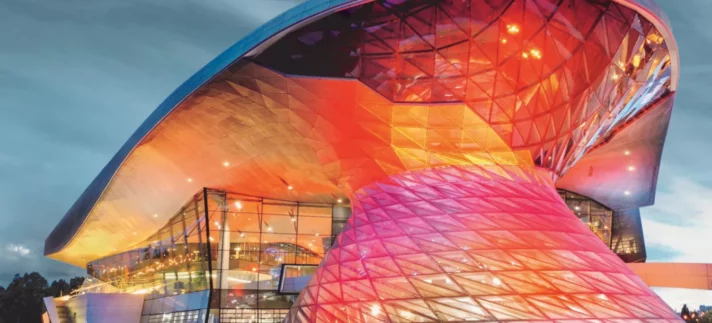
Secure your spot and join us in Munich at the BMW Welt.
Our Sponsors:


Registration & Breakfast
The industrial world is facing a knowledge crisis — and the answer lies in the data already locked inside your factory floor. In this keynote, Josef Waltl, CIO and founder, presents a unified three-product framework built on a single, self-reinforcing data layer that captures, protects, and amplifies factory knowledge at scale.
Josef will walk through how the three pillars work in concert: Industrial DevOps extracts, versions, and manages factory code in days with immediate backup and change detection. OT Cybersecurity monitors for unauthorized changes, ensures PLC firmware integrity, and delivers NIS2/CISA compliance — because once your code is visible, you must defend it. SDAi then amplifies it all, training AI on your factory’s normalized code to give junior engineers senior-level knowledge through code generation, error detection, and machine optimization.
The keynote closes with proof from the field: three customers sharing firsthand how the stack has transformed their operations — demonstrating that every PLC connected deepens the shared corpus and improves outcomes across the entire platform.
Coffee Break
What’s New in Security at Software Defined Automation — From NIS2 Compliance to AI-Powered OT Protection
The EU’s NIS2 Directive is now enforceable — and for manufacturers and critical infrastructure operators, the clock is ticking. With fines of up to €10M and personal C-level liability on the line, getting OT security right is no longer optional.
This session gives you a practical overview of what NIS2 means for your industrial operations and how the latest advances in OT-native security are changing what compliance looks like on the factory floor. From AI-powered code documentation and intelligent change detection to real-time CVE mapping and automated credential rotation, you’ll see how modern factory defence goes far beyond what traditional IT security tools can offer.
You’ll leave with a clear understanding of NIS2’s 10 mandatory requirements, where most OT environments have compliance gaps today, and how continuous, audit-ready security can be achieved without disrupting production.
Carlo Pacifico, Chief Revenue Officer & Rohit Verma, Director of Architecture & Cloud Development, Software Defined Automation
Software Governance and Resilience from a Client’s Perspective
As industrial environments grow more complex and software-defined, the question is no longer whether to govern your automation software—but how to do it without slowing operations down. In this session, ATS Global shares firsthand experience navigating software governance in large-scale OT environments: what works, what doesn’t, and what it takes to build real resilience across a distributed plant landscape.
From managing change across heterogeneous PLC and SCADA systems to meeting increasing compliance demands under frameworks like NIS2 and IEC 62443, attendees will hear a practitioner’s perspective on the organizational and technical challenges of keeping industrial software under control—and what a mature, resilient approach looks like once you get there.
Chris McComb, Head of Commercial, ATS Global UK&I
Henkel Customer Story – Details Coming Soon
Erik Stauvermann, Digital Transformation Manager, Henkel AG & Co. KGaA

Lunch
One Digital Thread, Zero Gaps: How MES and Industrial DevOps Unlock the Smart Factory
Aging infrastructure and fragmented automation environments put manufacturers under constant operational pressure. In this session, 42Q, Software Defined Automation, and AWS present an integrated edge-to-cloud architecture that securely bridges the IT/OT divide — connecting the control layer directly to a cloud-native MES without risking production downtime.
Using a real-world Fortune 500 automotive case study, attendees will see how a phased implementation spanning automated backup management, version control, and centralized change logging transforms unmanaged PLC environments into resilient, standardized operations. The results speak for themselves: recovery times cut from 40 to 5 minutes per failure, delivering up to $65,100 in direct annual savings.
Attendees leave with a clear blueprint for eliminating hardware vendor lock-in, reducing human error, and achieving real-time production visibility — at scale, and without disrupting live production.
Wellington Giolo, VP Business Development & Strategic Alliances, 42Q
Is “Software Defined” just a label? Three industries, One hard question
A cross-industry panel on what automation really means at scale.
Software Defined” is everywhere — but what does it actually mean when you’re managing hundreds of machines across a global production network, engineering custom drive systems at scale, or maintaining sterile manufacturing environments where a single undetected change can cost millions?
In this candid cross-industry panel, automation leaders from SEW-Eurodrive, Gropius, and Cytiva go beyond the buzzword. Together they tackle the hard questions that don’t make it onto product slides: What does it really take to standardize PLC code across sites with different machines, different vendors, and different cultures? Where does the talent crisis hurt most — and how is AI actually changing that on the floor? And at what point does “Software Defined” stop being a label and start being a genuine operational advantage?
Milan Licina, Business Development Manager, SEW Eurodrive
Jesús H. Carrero, Senior Field Service Engineer Automation, Cytiva
Michael Dürgner, Head of Engineering, Gropyus Technologies GmbH

The Developer as Factory Operator: Boosting Productivity with AI Assistants on the Line
Modern AI tools are shifting the developer’s role from writing every line by hand to operating an AI-augmented workflow – much like a factory operator overseeing automated production. In this talk, Michael and Thomas show how the developer steps into that operator role, while a set of “AI watchguards” handle the repetitive and error-prone work: analyzing project structure, maintaining context, generating code, and catching bugs before they reach production.
We’ll look at how context files can be defined at the customer level, so project analysis adapts to each customer’s specific needs and conventions rather than relying on generic assumptions. From there, we’ll see how the SDA MCP server lets you operate on customer project data across multiple vendors from a single AI workflow, and how VS Code integration brings these AI capabilities to virtually any plain-text-based project.
Through practical examples, Michael and Thomas walk a complete loop: feeding the AI the right context, crafting effective prompts, connecting data and tools via MCP, and using AI to review and validate its own output. You’ll leave with a concrete mental model for where to stay in control as the operator, where to delegate to AI, and how to set up guardrails that keep quality high as your output speeds up.
Thomas Mühlegger, Head of Engineering & Michael Frey, Senior Industrial Full Stack Developer, Software Defined Automation
Break
Customer Story – Breaking the Legacy Barrier: Scaling OT Services Globally
Legacy-driven OT landscapes continue to constrain scalability, standardization, and operational efficiency in global environments. This talk outlines how organizations can integrate local OT silos into globally scalable service capabilities—without disruptive system replacements. It provides practical insights and proven architectural patterns for successfully scaling OT organizations on a global level.
Frank Maurer, Global Head of Automation Strategy & Technology, Boehringer Ingelheim Deutschland GmbH

Software on Edge Devices: Who’s Actually in Control?
Do you know what edge devices are running on your shopfloor today, and which software version each one is on? What happens when an update is due? Does someone have to touch every machine by hand?
Patric shows how Margo, the open industry standard backed by the Linux Foundation, solves this at the infrastructure level: one open way to package, deploy, update, and eventually retire software, independent of vendor or platform. Machine builders and component suppliers already rely on it today. Patric shows what it takes for factory operators to be next: publishing an app once, rolling it out through a single interface, and getting one view across every machine and vendor, with no lock-in and no permanent internet connection required.
The takeaway: a concrete answer for factory operators on how software actually scales across their fleet.
Patric Scholz, Managing Director Sales & Finances, FLECS Technologies GmbH
Closing Keynote: No More Waiting: The Case for Acting on Software Defined Automation Now
The technology is proven. The compliance clock is ticking. The talent gap is widening. This closing session cuts through the noise and makes the case for why now is the moment to act on Software Defined Automation in your plants. Drawing on the insights, customer stories, and demonstrations from today, we distill the core business case: faster onboarding, audit-ready OT security, and AI that learns from your factory’s own knowledge. Whether you manage one site or fifty, the cost of delay is measurable — and the path forward is clearer than ever.
Josef Waltl, CEO & Founder, Software Defined Automation
End of Event


Please leave your contact details to register for the event: